
Concordia Parish District Court Overview
Concordia Parish belongs to the 7th Judicial District Court, a Louisiana district court serving Concordia and Catahoula Parishes. District courts are general jurisdiction trial courts. In Concordia Parish, that means district court can be the forum for felony criminal cases, major civil suits, divorce and family matters, succession or probate-style filings, juvenile and OCS-related filings, and other matters assigned by Louisiana law. The District Court is not the same office as the Clerk of Court. Judges hear cases, while the Clerk receives filings, maintains the record, issues certified copies, and handles record searches.
The courthouse is the working center for several connected offices. The judges' Vidalia office is in Room 10. The Clerk is in Room 5. The District Attorney is in Room 9. The sheriff has a courthouse office in Room 7. Public defender information is listed in the courthouse building. A person with one case may need more than one office, such as the Clerk for a filed order, the DA for charge status, or the sheriff for custody and bond logistics.
The 7th Judicial District Attorney Concordia office page is one official source for courthouse address, phone, fax, and office hours tied to prosecution work.

That DA page supports local court routing, but filed district court records still route through the Clerk after a case is opened.
Concordia Parish District Court Offices
The 7th Judicial District Court has two listed Concordia Parish district judges and a shared Vidalia office. The research does not show separate numbered district courts with different street addresses inside Concordia Parish. Instead, Division A and Division B are the useful local division labels. The same table also includes the Clerk, District Attorney, and Public Defender because those offices are part of the courthouse workflow readers need for district court records, prosecution, and defense appointment questions.
| Court or Office | Type | Address | Phone |
|---|---|---|---|
| 7th Judicial District Court, Division A | District Court judge, Honorable Kathy Johnson | 4001 Carter Street, Room 10, Vidalia, LA 71373 | 318-336-7121 |
| 7th Judicial District Court, Division B | District Court judge, Honorable John Reeves | 4001 Carter Street, Room 10, Vidalia, LA 71373 | 318-336-7121 |
| 7th JDC Harrisonburg office | Shared district court office for Catahoula side of the district | 301 Bushley Street, Harrisonburg, LA 71340 | 318-744-5414 |
| Concordia Parish Clerk of Court | District court records, filings, copies, land, marriage, jury, and elections | 4001 Carter Street, Room 5, Vidalia, LA 71373 | 318-336-4204 |
| 7th Judicial District Attorney, Concordia | Felony and state prosecution, traffic diversion, child support, and worthless checks | 4001 Carter Street, Room 9, Vidalia, LA 71373 | 318-336-5526 |
| Public Defender | Criminal-defense appointment ecosystem | 4001 Carter Street, Courthouse Building, Vidalia, LA 71373 | 318-336-5526 |
The District Attorney traffic page is also part of the district court ecosystem when a state traffic-law violation is routed to DA diversion.

Traffic diversion is not a general district court docket search, but it is a local case-resolution channel readers should not confuse with Clerk records.
District Court vs Local Courts
Louisiana does not use a separate county court for Concordia Parish in the way some states do. The main trial court is the District Court, while city courts, mayor's courts, municipal courts, and justice of the peace courts may handle smaller or local matters. The Clerk's criminal-records page states a key local split: felonies are handled by the district court criminal department, misdemeanors inside city limits are handled in city courts, and misdemeanors outside city limits reach the Clerk when the District Attorney files a bill of information or indictment.
| District Court | City / Municipal / Mayor's Court | Justice of the Peace Court | |
|---|---|---|---|
| Typical Role | General jurisdiction trial court for major civil, felony, family, probate, succession, juvenile, and related matters. | Local misdemeanors, ordinances, traffic, or municipal matters depending on event location. | Lower local civil and small-claim style matters under Louisiana law. |
| Criminal Routing | Felonies and outside-city misdemeanors when the DA files formal charges. | City-limit misdemeanors may stay there according to the Clerk's criminal-records page. | Confirm precinct and matter locally before routing a criminal or quasi-criminal issue. |
| Record Custodian | Clerk of Court for filed district court records. | The local court or municipal office tied to the matter. | The justice of the peace or local office maintaining the file. |
| Best First Step | Call the Clerk with names, case type, and date range. | Verify the city or municipal court based on where the citation or offense occurred. | Confirm jurisdiction before assuming the District Court has the record. |
Concordia Parish District Court Flow
A district court case can produce records in several offices before the case is done. In a criminal matter, law enforcement may create an arrest or booking file first. The District Attorney then decides whether to file a bill of information, indictment, or other formal charge. After filing, the Clerk's Criminal Department maintains the court record, including motions, subpoenas, bench warrants, minute entries, orders, pleas, disposition, and sentence entries when those events occur. The full criminal case file is different from a jail roster or arrest record.
Criminal flow: Arrest or investigation › DA charging decision › Bill of information or indictment › Arraignment › Motions and hearings › Plea or trial › Disposition › Sentencing › Appeal or post-judgment action.
Civil flow: Petition filed with Clerk › Service and answer › Exceptions or motions › Hearings › Judgment › Post-judgment filings › Appeal if taken.
Probate or succession flow: Petition or will-related filing › Notices, inventories, bonds, or oaths if required › Judgment of possession or other order › Related land or conveyance recording when real property is affected.
Note: A single Concordia Parish District Court matter can involve court, Clerk, DA, sheriff, and appellate records.
Concordia Parish District Court Divisions
District court divisions in Concordia Parish are best understood by case function rather than by separate public buildings. Civil records include divorces, damages, garnishments, executory process, and other suits filed with the Clerk. Criminal records begin when formal charges from the 7th Judicial District Attorney are filed into court. Probate and succession records are handled through district court and Clerk civil/probate record functions, not a standalone probate court. Juvenile and OCS matters are handled by the Clerk's criminal department but are restricted from ordinary public access.
Sheriff and agency records can still connect to district court. The sheriff's jail page describes property-bond steps involving the jail, assessor, Clerk, sheriff, and recorded papers. The sheriff civil department handles sheriff sales and related civil-process work. These are not a substitute for district court records, but they explain why one court matter may produce records in several courthouse rooms.
The sheriff's sex-offender information page is assigned as a district-court image source because registration and criminal-history issues may sit beside district court criminal records in the justice workflow.
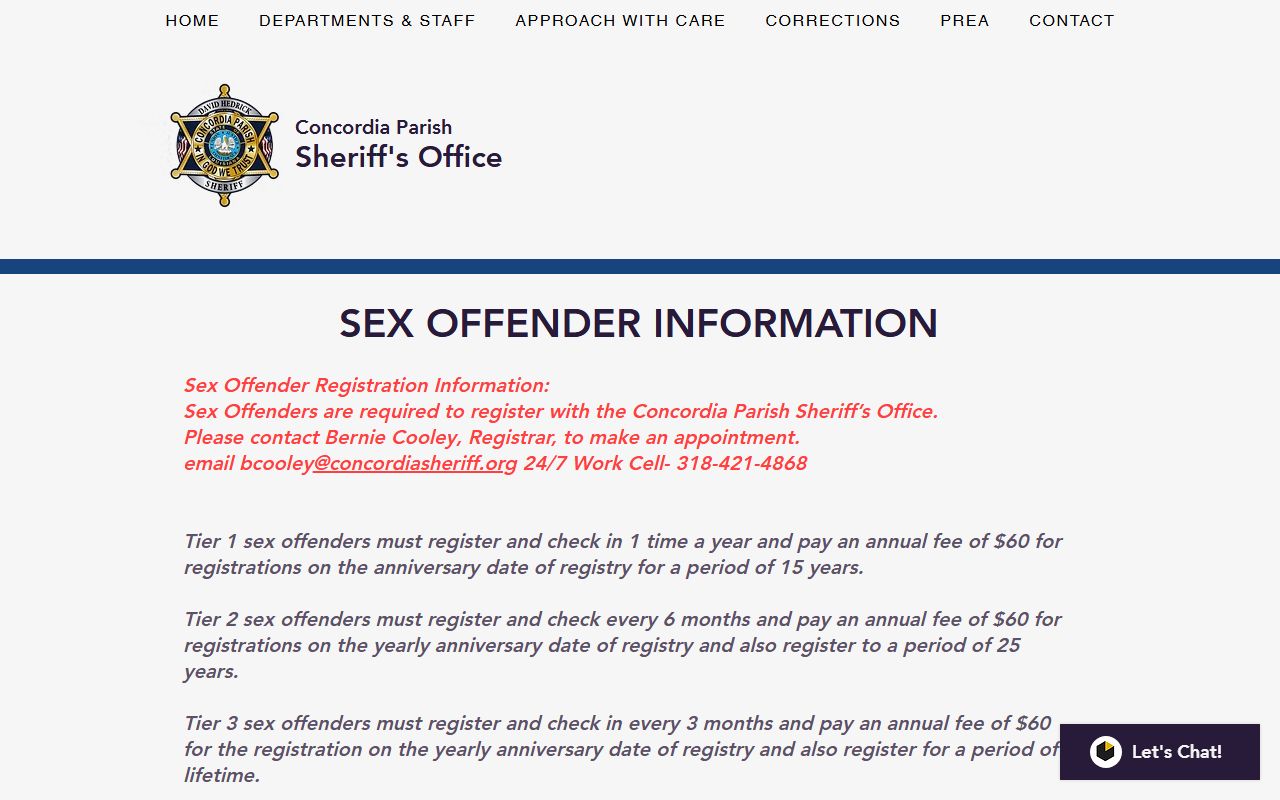
Sex-offender registration records should not be described as district court dockets, but they may relate to criminal judgments, supervision, and sheriff reporting duties.
The sheriff's Approach With Care page describes a local special-needs decal and registration program that can help law enforcement and first responders identify occupants who may need support.
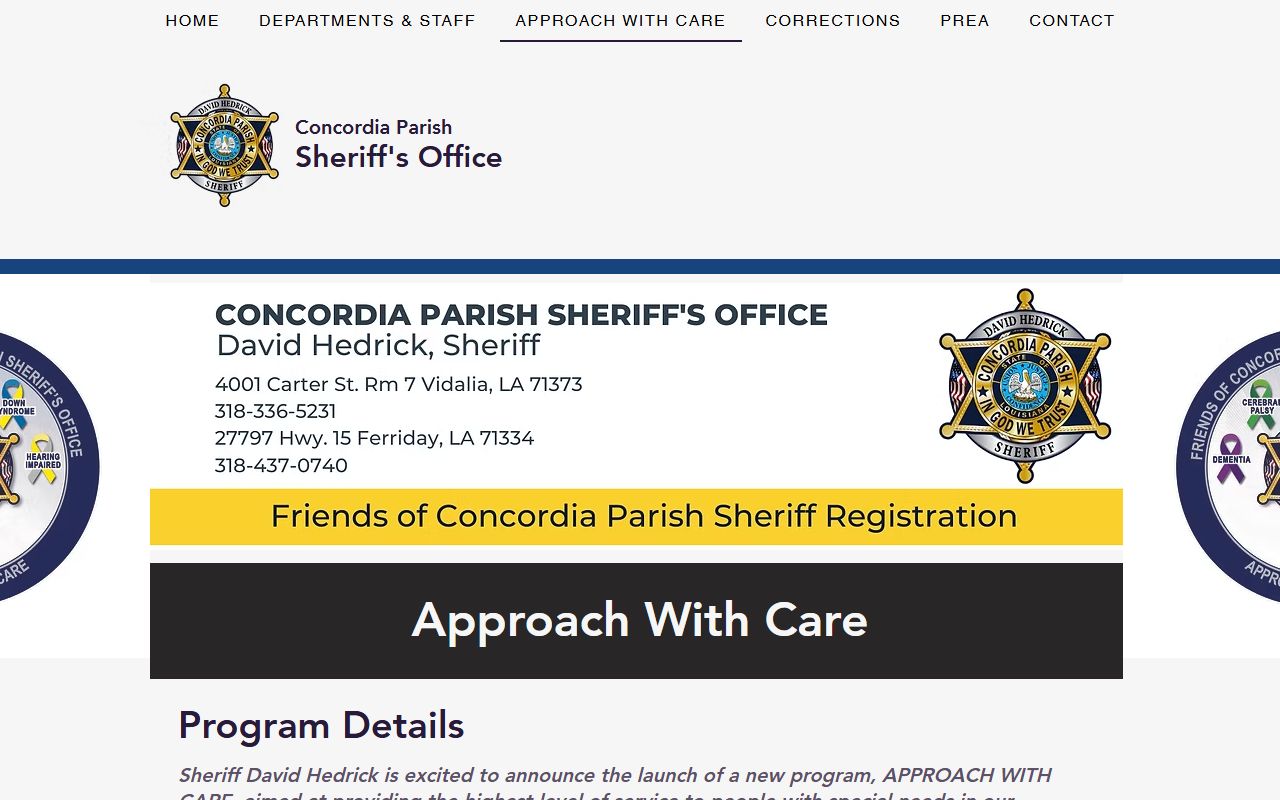
That program is not a court program, but it is part of the local justice and first-responder ecosystem surrounding courthouse records.
Concordia Parish Appeals
Concordia Parish district court judgments and writ matters can move into Louisiana's appellate system. Louisiana's highest court is the Louisiana Supreme Court. The intermediate courts are Louisiana Courts of Appeal. Concordia Parish is in the Louisiana Court of Appeal, Third Circuit, and Louisiana law places Concordia in the first district of that circuit. Appeals do not start as a new local Clerk search. They follow rules for appellate records, trial court records, transcripts, orders, and deadlines.
For district court record users, the practical point is simple: a trial court file at the Clerk may contain appeal-related orders, notices, or filings, while the appellate court may hold the appellate docket and opinions. If a judgment has been appealed, search both the trial-level record and the appellate court source. The trial court file can help identify the case number, judgment date, party names, and documents sent up on appeal.
Lower Courts and Agencies
Lower courts and agencies matter because not every Concordia Parish legal event becomes a district court record. City courts, mayor's courts, and municipal courts may handle city misdemeanors, local ordinances, and traffic matters. Justice of the peace courts may handle lower-level civil and small-claim style issues. The sheriff holds custody, jail, property bond, civil department, and some law-enforcement records. The District Attorney handles prosecution decisions, formal charges, traffic diversion, child support/criminal neglect, and worthless-check program information.
The sheriff jail information page is relevant to District Court because bond and custody issues often sit next to pending criminal cases.
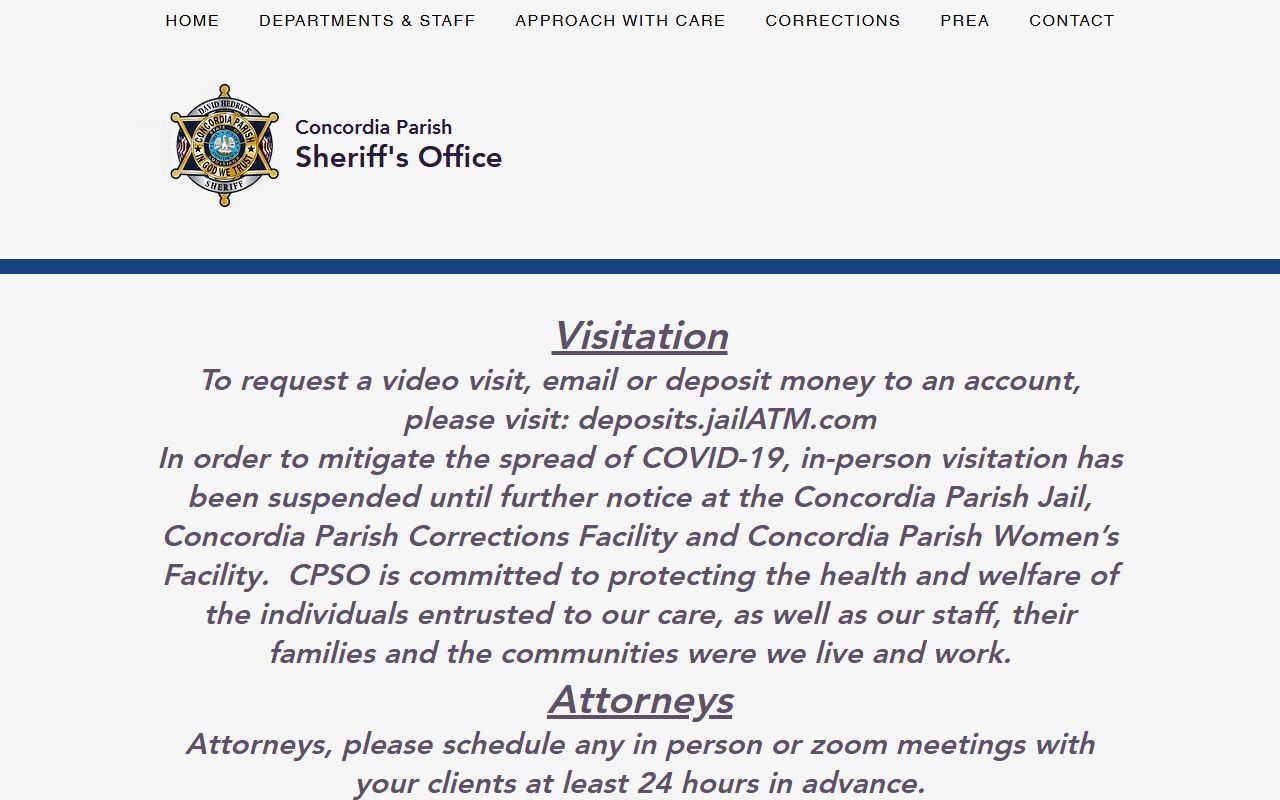
Use jail and bond information for custody logistics, but use the Clerk for filed District Court records after formal charges or court filings exist.
The sheriff civil department page supplies civil-process context, including sheriff sales held Wednesday mornings and public notice through the Concordia Sentinel.
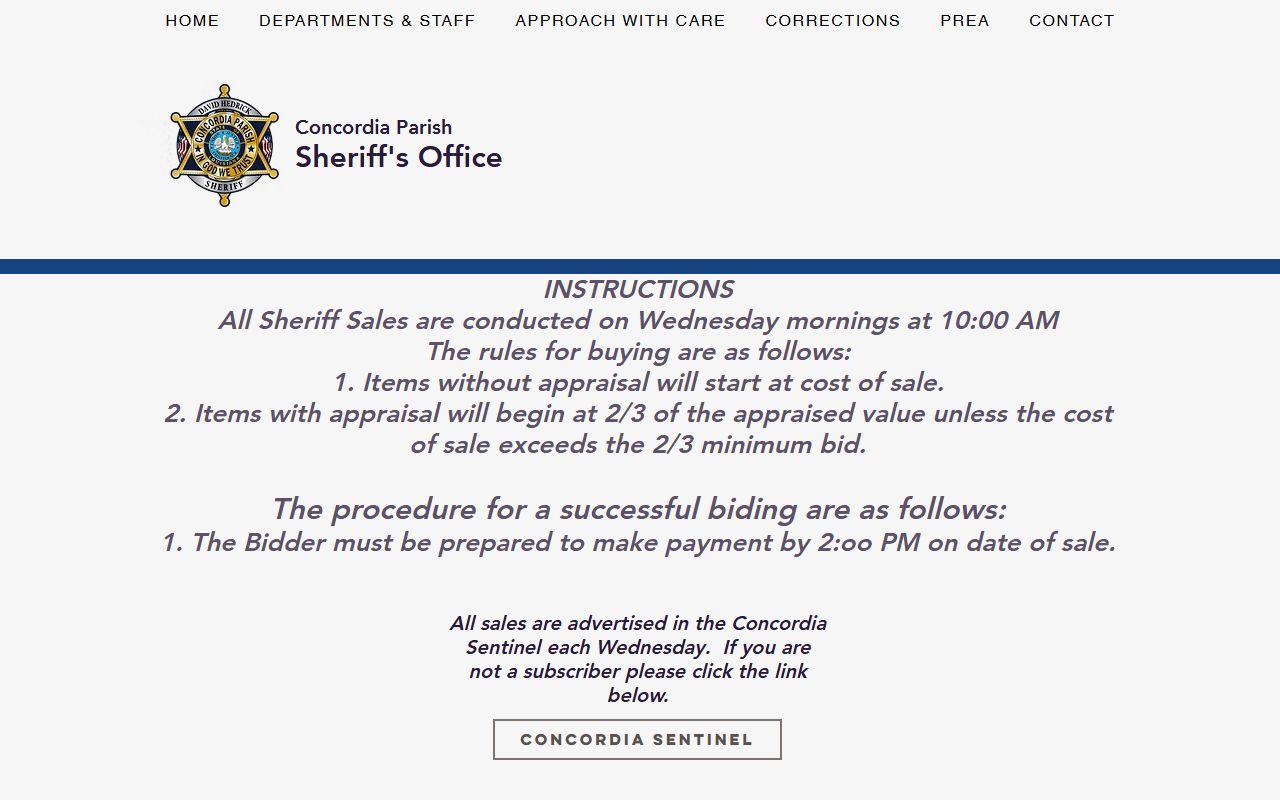
Sheriff civil-process records can relate to judgments and enforcement, but the underlying civil court file remains a Clerk record.
- Bill of information
- A formal criminal charge filed by a prosecutor.
- Minute entry
- A brief court record of what happened during a hearing.
- Judgment
- A court ruling that resolves an issue or case.
- Certified copy
- A Clerk-authenticated copy used for official proof.