
Concordia Parish Criminal Court Records
Adult criminal court records in Concordia Parish are maintained through the Concordia Parish Clerk of Court when a district-court criminal case has been opened. The Clerk's criminal department describes its work as filing formal charges from the 7th Judicial District Attorney, handling felony charges under Louisiana criminal procedure, and handling misdemeanors outside city limits when the District Attorney files a bill of information or indictment. That is the key local line: an arrest record may exist at the sheriff or arresting agency before a formal district-court case appears at the Clerk.
The local trial court is the District Court for the 7th Judicial District, which serves Concordia and Catahoula Parishes. Concordia's district judges use the courthouse office in Vidalia, while the DA and Clerk keep their own office functions in the same courthouse. Misdemeanors that occur inside city limits are not automatically Concordia Parish District Court records. The Clerk's criminal-records page says those city-limit misdemeanors are handled in city courts. Felony criminal records and outside-city misdemeanor records filed by bill of information or indictment belong in the district-court criminal case path.
Concordia Parish Criminal Record Search
Concordia Parish does not publish a public, full-text district-court criminal case portal in the official pages reviewed for this project. The reliable method is to contact the Concordia Parish Clerk criminal records department with the name, case number if known, record type, and date range. The Clerk states that criminal history searches cost $25 per name, that computer criminal records begin in 1980, and that older research may be possible. Plain copies are $1 per page, and certified copies are $5 extra.
The best Concordia Parish criminal court record search starts by choosing the right custodian before paying for copies. Use the Clerk for district-court criminal files. Use the sheriff or jail for current custody, booking, bond, and property-bond questions. Use the DA when formal-charge status, prosecution correspondence, traffic diversion, child-support criminal neglect, or worthless-check program information is the issue. Use city court or a mayor's court for city-limit misdemeanors and local ordinance matters.
- Identify whether the matter is a district-court felony, an outside-city misdemeanor, a city-court misdemeanor, or only a booking record.
- Call the Clerk at 318-336-4204 for district-court criminal case research, search fees, copy fees, and certified-copy needs.
- Provide the defendant name, date range, case number if known, and whether the request needs plain copies or certified copies.
- Ask whether the case has a public file, a sealed or expunged status, or a juvenile/OCS restriction.
- Verify any jail, bond, or custody fact separately with the Concordia Parish Sheriff's Office or correctional facility.
Note: A local criminal case file is not the same as a statewide background check or a private employment screening report.
Concordia Parish Criminal Case Flow
A criminal case file grows as the court acts. The first court filing may be a bill of information, indictment, or other formal charge. The arraignment records the charge and plea. Motions and orders show contested issues before trial. Minute entries record what occurred in court, because the Clerk's criminal department has a Minute Clerk who types a brief outline of court events, keeps evidence admitted into the record, and administers oaths to witnesses and jurors. The final record may include a plea or verdict, a disposition by charge, sentence terms, costs, and later orders.
Case flow: Charges Filed › Arraignment › Pretrial and Motions › Plea or Trial › Disposition › Sentencing
| Stage | What It Adds to the Record |
|---|---|
| Charges filed | The DA-filed bill of information, indictment, or amended charge starts or changes the criminal case file. |
| Arraignment | The court records the charge, the defendant's plea, counsel status, and future settings. |
| Pretrial and motions | Motions, orders, subpoenas, evidence entries, bench warrants, and hearing minutes may be added. |
| Plea or trial | The record shows a plea, verdict, dismissal, acquittal, or other charge-level outcome. |
| Disposition and sentence | The final entry may show jail, probation, fines, costs, conditions, or other sentence terms. |
Concordia Criminal Record Fields
Because no public sample Concordia district-court docket was visible in the official pages reviewed, the field list must stay conservative. A Clerk criminal file may show only the items that exist in that case. The file may also omit data that belongs to a different custodian, such as jail housing, booking photos, or state criminal-history data. For arrest-to-charge details before the full case file is complete, use the focused Concordia Parish arrest records and court charges page.
| Field | What It Shows |
|---|---|
| Case number | The Clerk's identifier for the district-court file, if a formal case exists. |
| Defendant | The person charged by the State of Louisiana in the criminal case. |
| Charging document | A bill of information, indictment, amended charge, or other filed accusation. |
| Minute entries | Brief court-event notes prepared by the Minute Clerk for hearings and proceedings. |
| Plea and disposition | How each charge was answered and resolved, such as guilty, dismissed, acquitted, or pending. |
| Sentence | Jail, probation, fines, costs, conditions, or other terms imposed after conviction. |
| Process documents | Subpoenas, service returns, bench warrants, notices, and related criminal-process papers. |
| Certification | Whether the copy is certified by the Clerk for official use. |
The official criminal-records page is also a fee source. It says criminal history searches are $25 per name, copies are $1 per page, and certified copies add $5. Computer records begin in 1980, which matters for older Concordia Parish criminal court records. A person researching a case from before the computer index may need staff research rather than a simple name lookup.
Concordia Criminal Record Access
Louisiana public access starts with the custodian of the record. District-court criminal files generally begin with the Concordia Parish Clerk of Court, while sheriff custody files, jail information, sex-offender registration details, and property-bond logistics begin with the sheriff. Prosecutor files and formal-charge decisions are separate from the Clerk's case file. That is why a complete criminal record search may require more than one office, even when the same incident led to all records.
The Louisiana Public Records Law provides the broad public-records framework, but criminal cases have important exceptions. The public-records custodian provisions make the requesting office matter. A Clerk file, sheriff file, DA record, State Police record, or federal record may require a separate request. Ask for the exact record by type rather than asking one office to search every justice-system source.
The image below links to the Louisiana Code of Criminal Procedure expungement article page family, one of the key state sources for limits on public criminal access.
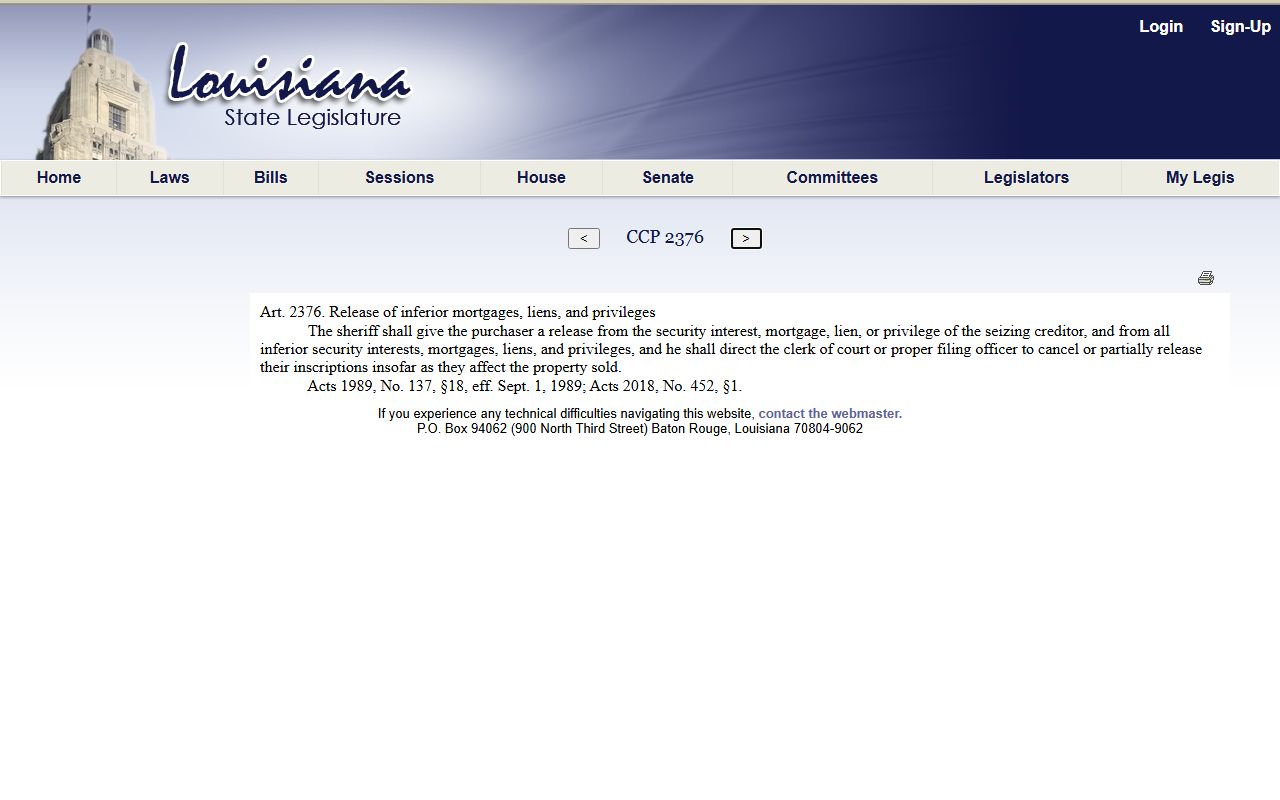
Expungement rules matter because an eligible Concordia Parish criminal court record may stop appearing in ordinary public access even though some agencies retain limited legal access.
Concordia Charges and Convictions
A charge is an accusation filed or amended in the court record. A conviction is an outcome after a guilty plea, verdict, or other legally recognized finding. Concordia Parish criminal court records can contain both, but the difference matters. A file may show charges that were reduced, dismissed, or not prosecuted. It may also show multiple charges from one arrest, with each charge ending in a different status.
| Point | Charge | Conviction |
|---|---|---|
| Meaning | Formal accusation by charging document. | Final finding or plea that establishes guilt. |
| Timing | Appears early in the case and may change. | Appears after plea, trial, or final disposition. |
| Record risk | Can be misread if the outcome is ignored. | Must still be read with sentence and later orders. |
| Where to verify | Clerk charge filing and DA status. | Clerk disposition, minutes, judgment, and sentence. |
For background-check use, do not treat a charge list as a conviction list. Confirm the disposition for each count, then request certified copies if the record will be used in a legal, licensing, immigration, or administrative setting.
Concordia Sealed Criminal Records
Concordia Parish adult criminal records can be limited by Louisiana sealing, expungement, juvenile, OCS, and court-order rules. The Clerk's criminal-records page states that juvenile records are not open to the public. Louisiana Children's Code confidentiality provisions support that local statement. Adoption records are also described by the Clerk's civil page as not public, and OCS matters should not be treated as ordinary public files unless an official source says a specific document is open.
The image below links to the Louisiana Children's Code confidentiality and access provisions, which help explain why juvenile criminal-style records are not searched like adult court cases.
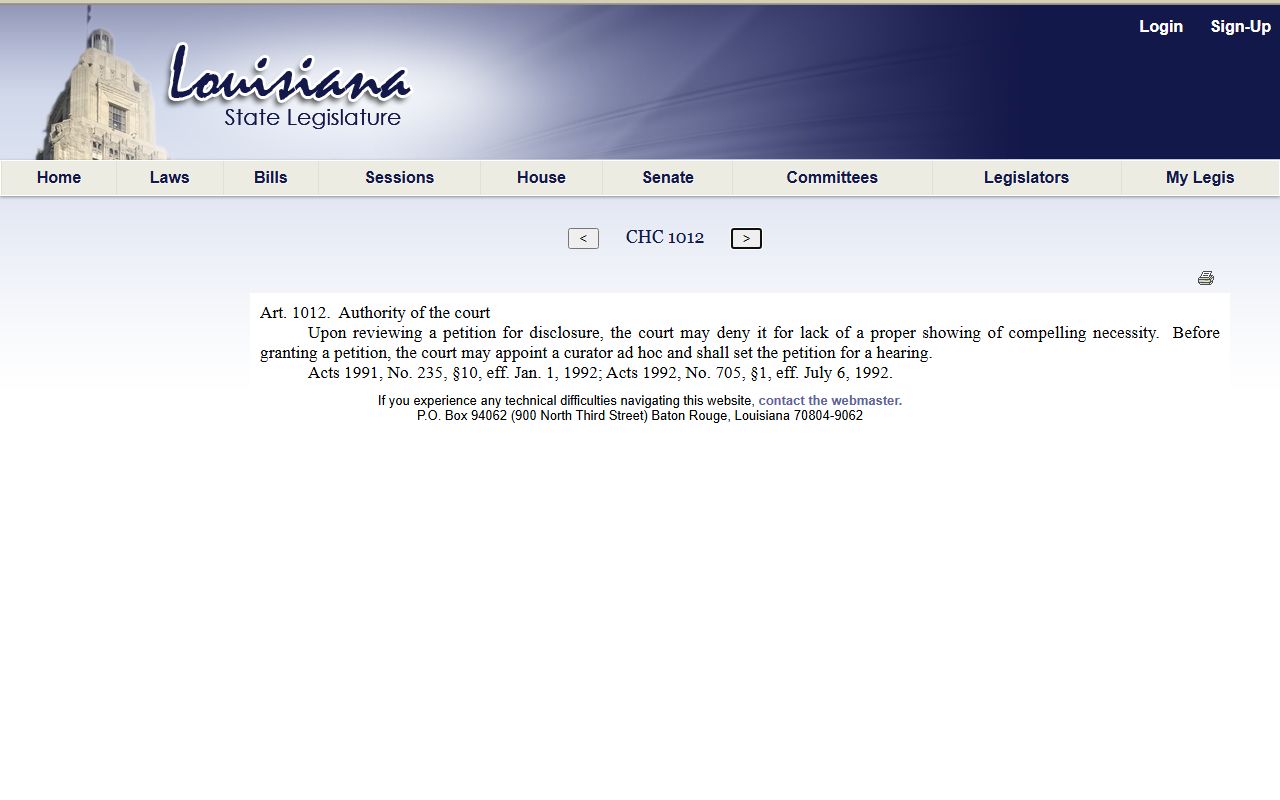
Juvenile limits are a hard boundary for public record copy requests, not a search technique issue.
| Point | Sealed | Expunged |
|---|---|---|
| Public view | Restricted from ordinary public inspection by law or court order. | Removed from ordinary public access after a granted expungement order. |
| Agency access | Some courts or agencies may keep limited access. | Some agencies may still retain access allowed by Louisiana law. |
| What to request | Ask the Clerk whether the case can be inspected or copied. | Ask for the expungement order or eligibility path only if authorized. |
Concordia Criminal Record Sources
Some criminal justice records look connected but are not kept in the same place. Current custody and bond information should be checked with the Concordia Parish Sheriff's Office. The sheriff's jail information page describes a property bond process that can require the jail, assessor, Clerk, sheriff, recording desk, and a return to jail with recorded papers and receipts. The jail must confirm the bond amount and whether a property bond is allowed before that process begins.
Statewide and federal records are separate. Louisiana State Police services may be relevant for statewide background or sex-offender information. Federal criminal cases from Concordia Parish are not Clerk of Court cases; they belong to the U.S. District Court for the Western District of Louisiana and federal PACER access. DA Brad Burget's Concordia office at 4001 Carter Street, Room 9, Vidalia, LA 71373 handles local prosecution contacts, while the public defender entry appears in the courthouse ecosystem for appointed-defense context.
The image below links to the Louisiana marriage-license statute page family, a reminder that the Clerk's office handles several record systems beyond criminal files.
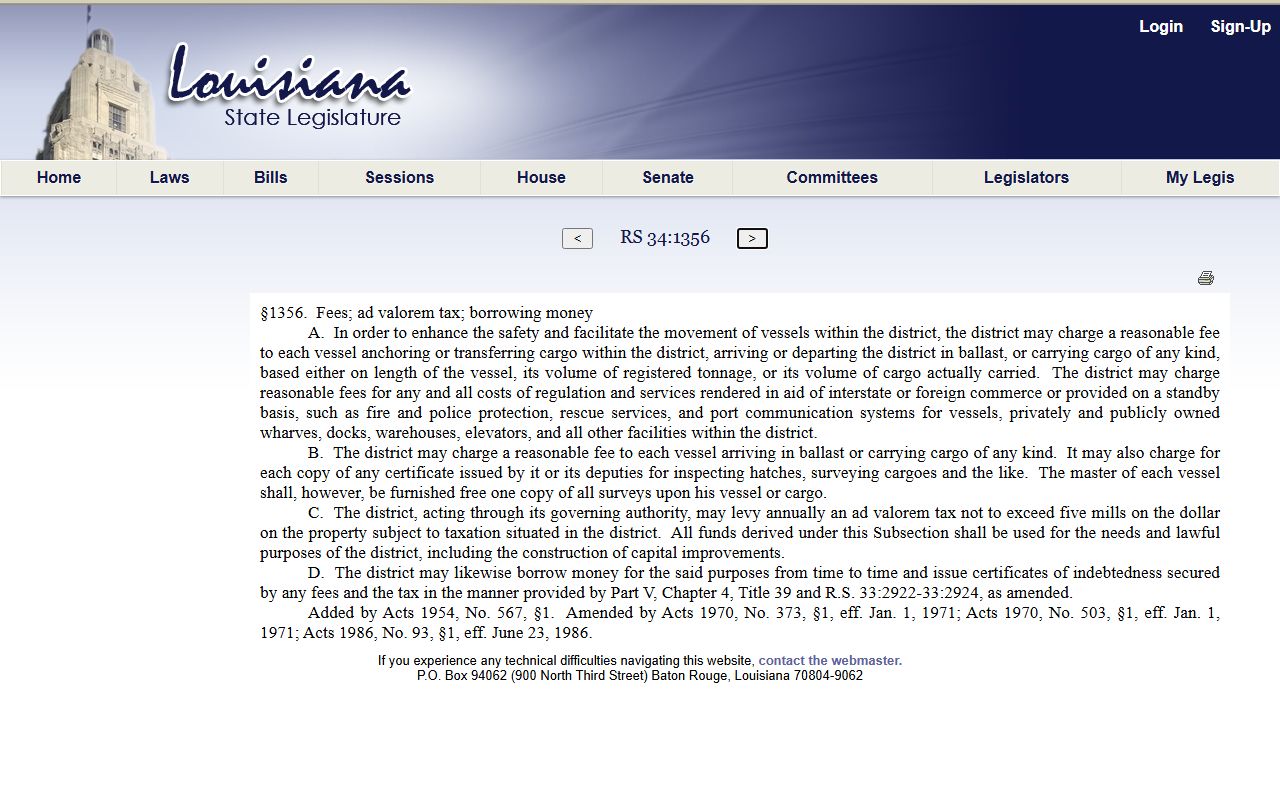
Concordia's unified Clerk role can help researchers, but it also makes it important to name the exact record type when calling or requesting copies.
Important: This site is not a consumer reporting agency. Verify criminal records with the originating public office before official use.